
28 day prescription refill
Four exact weeks, common for blister packs and weekly dosing. Filled April 1 with 28 days supplied and no early allowance gives an estimated next date of April 29, then May 27.

Pharmacy Refill Calculator
Version 1.0 · iOS
Estimate your next refill date from the last fill date and days supplied. Works for 28, 30, 60 and 90 day supplies, or any custom number of days. The working calculator shows the calendar math and keeps every date in your local timezone.
Get the app
Prescription Refill Calculator
Available now on iOS, Android coming soon
Arithmetic reference only. Results do not guarantee refill eligibility and are not medical, prescribing or legal advice.
Your estimate will appear here.
Enter the fill date and supply length. The calculation stays in your browser and uses local calendar dates.
An estimate only. It does not override instructions from a prescriber, pharmacist or insurer, or any controlled-substance or other local law.
Unlimited dates, days supply and quantities — fully offline.
6 focused tools
Dates, supply and quantities
Transparent math
Formulas and assumptions shown
Private by design
No account required
Refill-date guide
The estimate adds the number of supplied days to the local calendar fill date. If a specific early-refill allowance applies, that many days are subtracted from the supply interval. For example, a 30-day supply with no early allowance uses fill date + 30 calendar days. The calculator does not decide whether a pharmacy or insurer will authorize the refill.
Four exact weeks, common for blister packs and weekly dosing. Filled April 1 with 28 days supplied and no early allowance gives an estimated next date of April 29, then May 27.
The standard monthly supply. Filled April 1 with 30 days supplied and no early allowance gives an estimated next date of May 1.
A two-month maintenance supply. Filled April 1 with 60 days supplied and no early allowance gives an estimated next date of May 31.
A quarterly or mail-order supply. Filled April 1 with 90 days supplied and no early allowance gives an estimated next date of June 30.
Insurers and pharmacy systems reject a claim as “refill too soon” until a set share of the last supply should have been used. Many plans release the next fill at around 75% to 80% of the days supply, and controlled substances are often held to a stricter limit. The table shows the earliest refill day under common thresholds. Enter the matching days early in the calculator above, and check your own plan's rule before relying on it.
| Days supply | 75% used | 80% used | 85% used | 90% used |
|---|---|---|---|---|
| 28 day supply | Day 217 days early | Day 235 days early | Day 244 days early | Day 262 days early |
| 30 day supply | Day 237 days early | Day 246 days early | Day 264 days early | Day 273 days early |
| 60 day supply | Day 4515 days early | Day 4812 days early | Day 519 days early | Day 546 days early |
| 90 day supply | Day 6822 days early | Day 7218 days early | Day 7713 days early | Day 819 days early |
People search for this tool under a lot of names: an Rx refill calculator, a script refill calculator, a medication or medicine refill calculator, a med refill calculator, a drug refill calculator or simply a refill date calculator. The vocabulary changes by country and by pharmacy, but the arithmetic does not. Every one of them is the fill date plus the days supplied, minus any early-refill allowance that has been authorized for that specific prescription.
Enter an early-refill value only when a pharmacist, prescriber, insurer or plan has supplied one for the situation. An arithmetic estimate never creates permission to fill early, particularly for controlled substances.
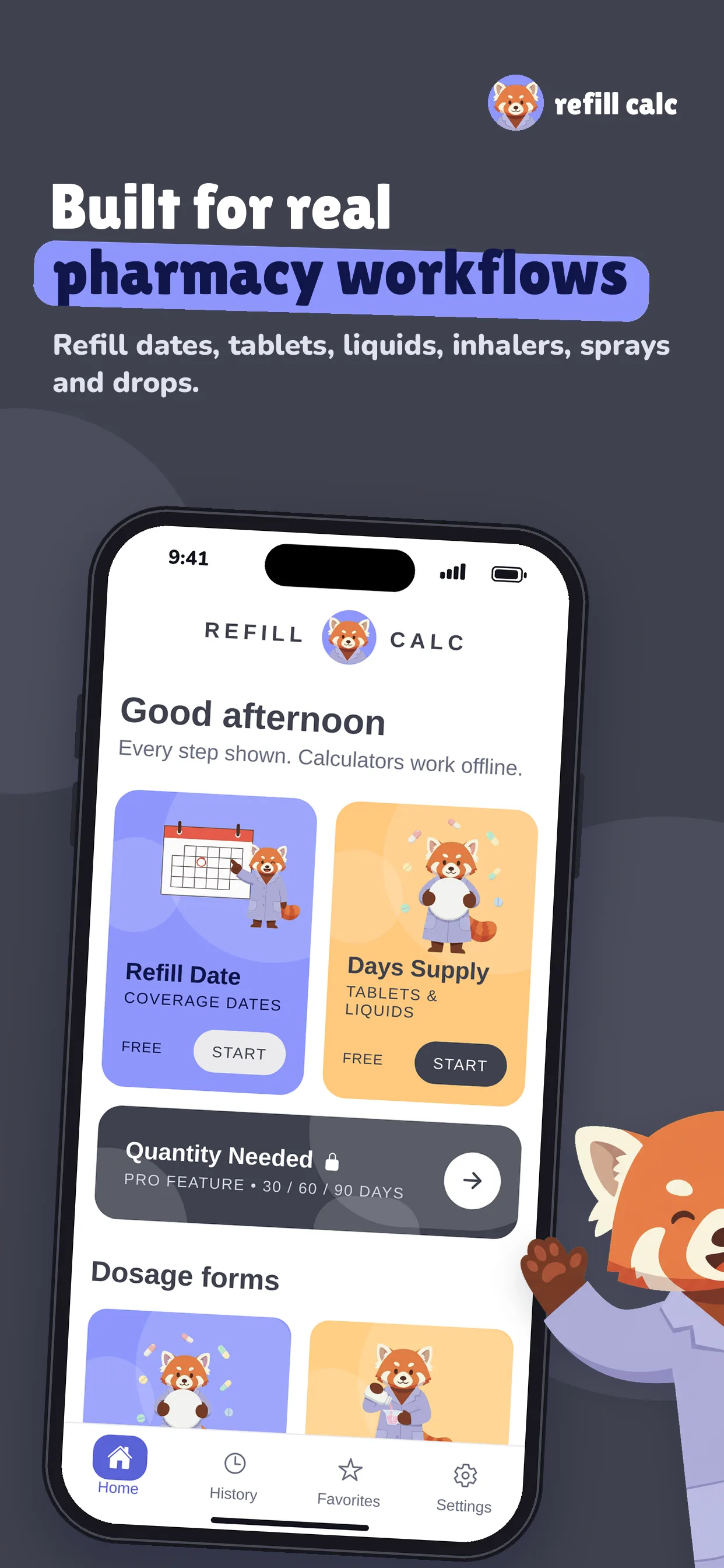
The mobile app adds days-supply and quantity workflows for tablets, liquids, inhalers, sprays and drops, plus local history and reusable favorites, all offline, with no account. It is out now on iPhone and iPad. An Android release is in preparation.
Built for clear checking
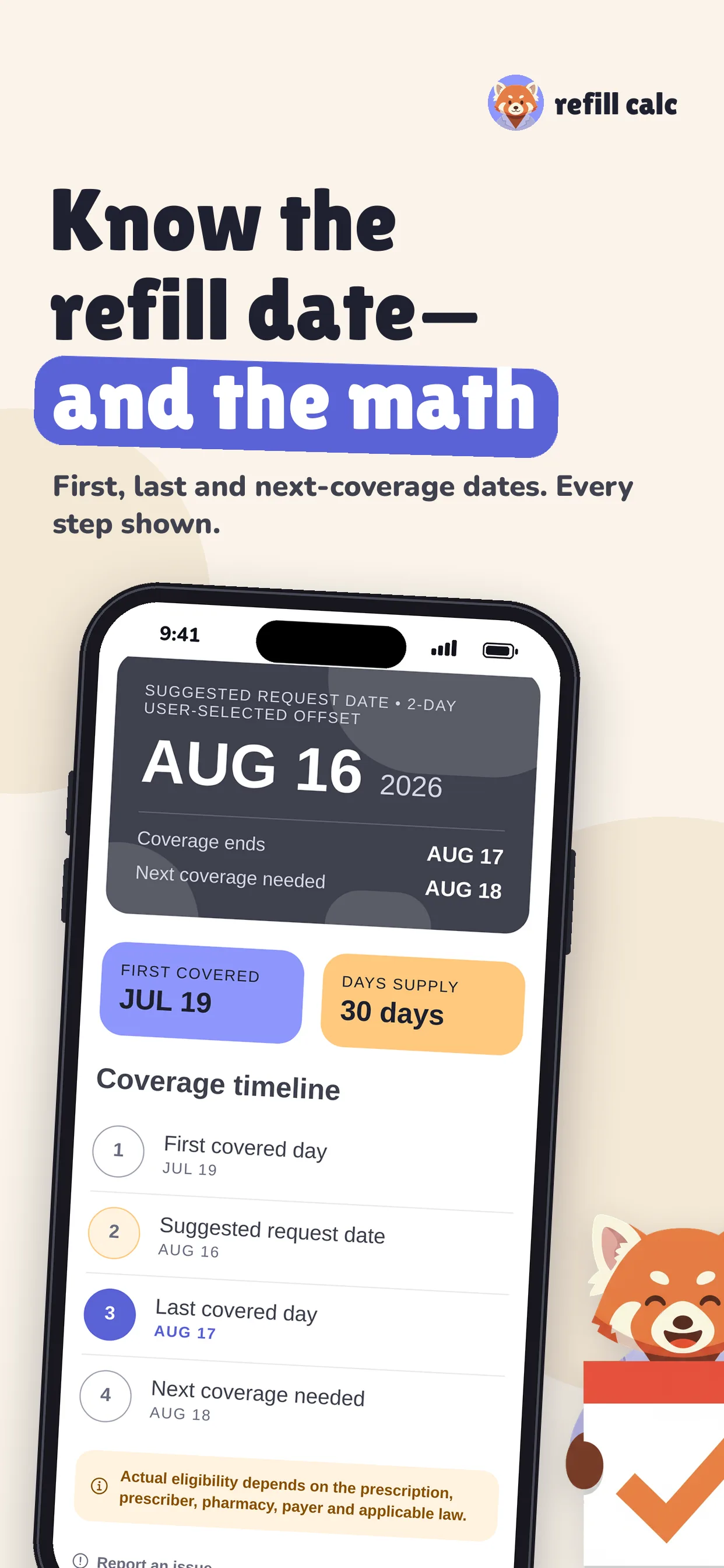
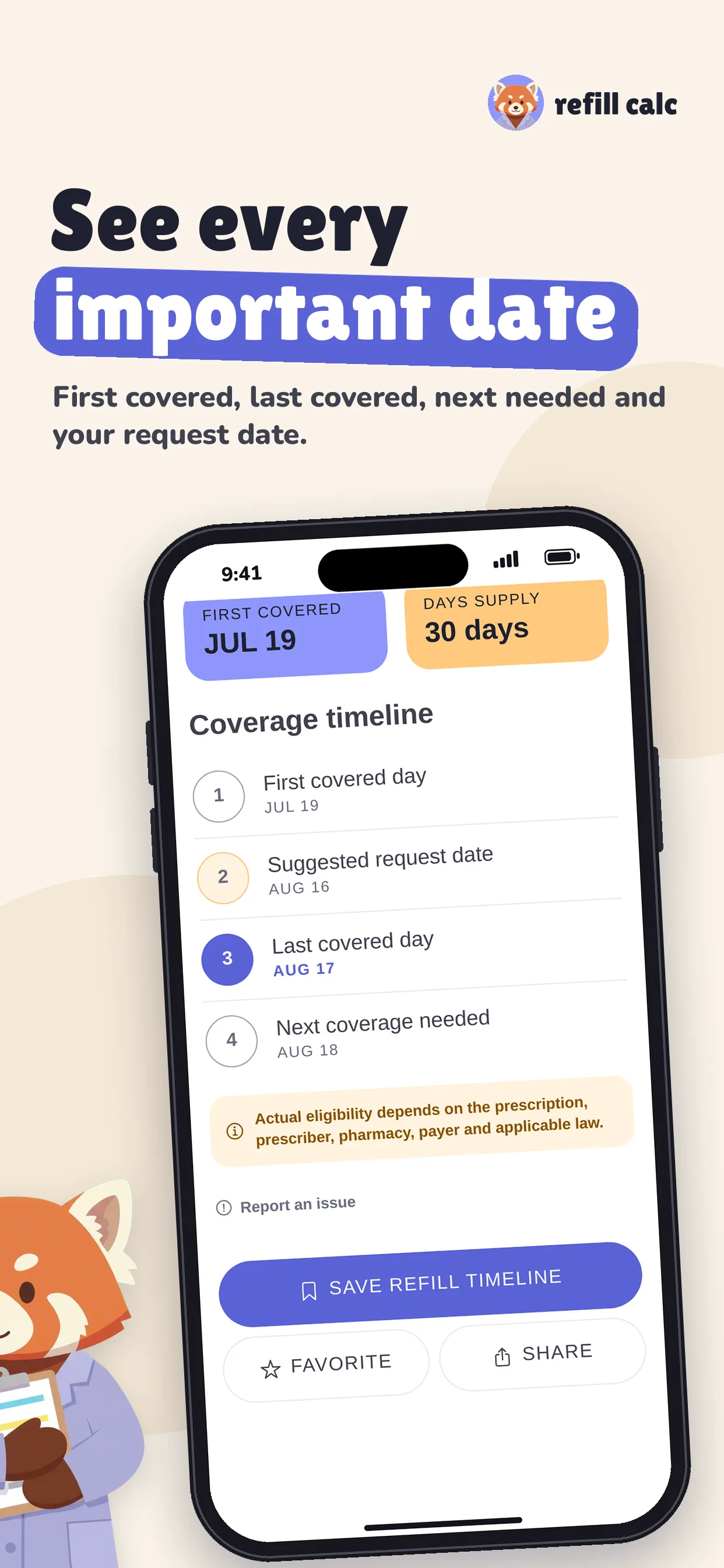
See the first covered date, suggested request date, last covered date and next coverage date in one clear timeline.
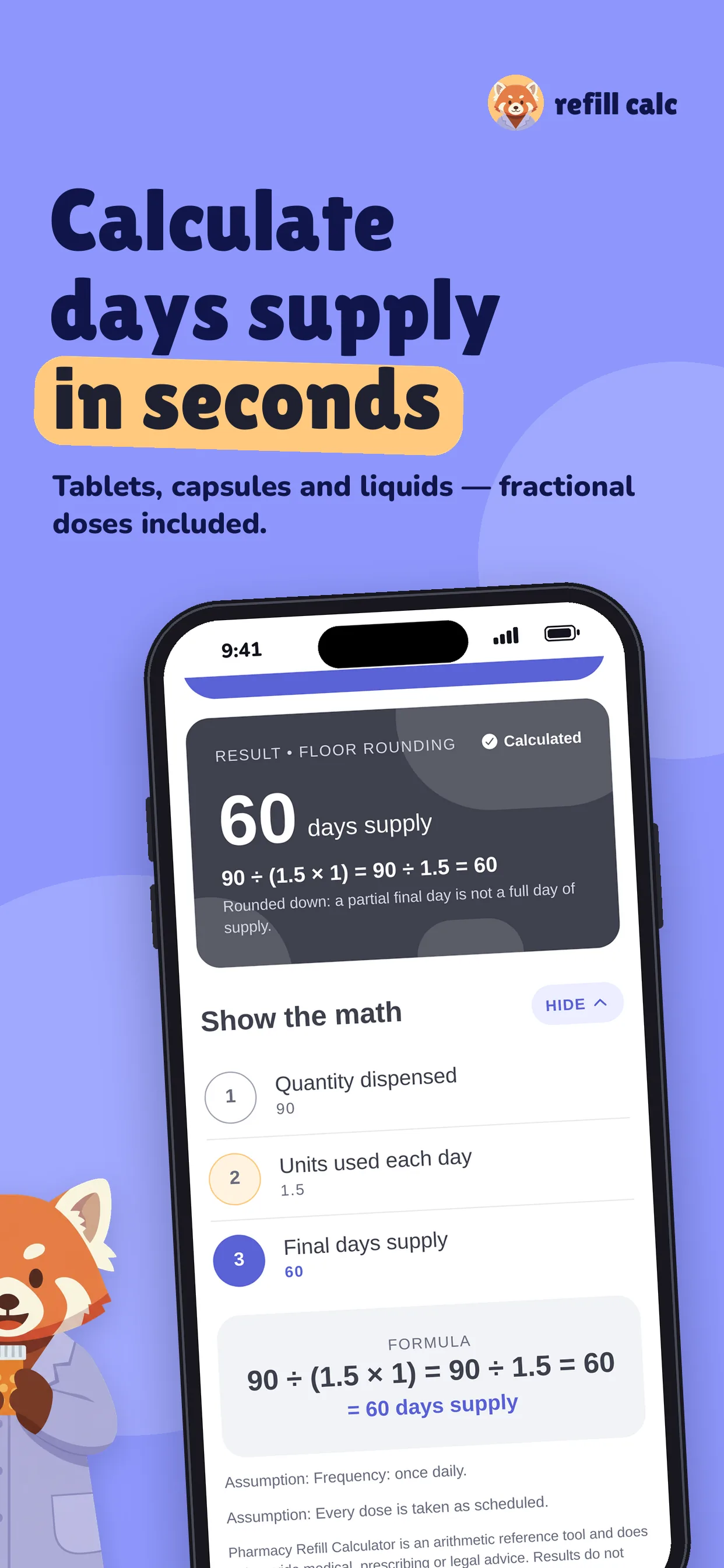
Calculate days supply for tablets, capsules and liquids with common frequencies and unit conversions.
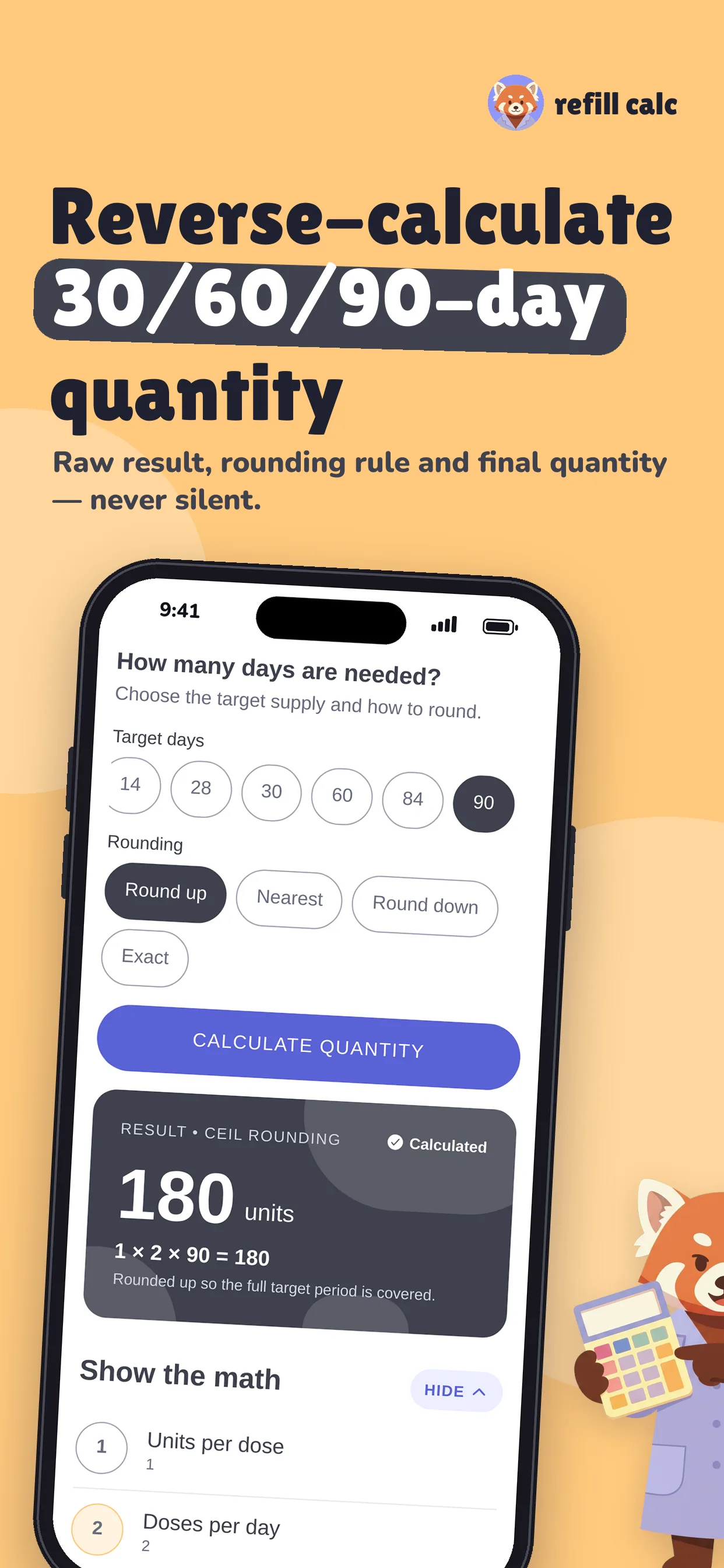
Work backwards from a 30, 60, 90 or custom-day target to the quantity needed, with explicit rounding.
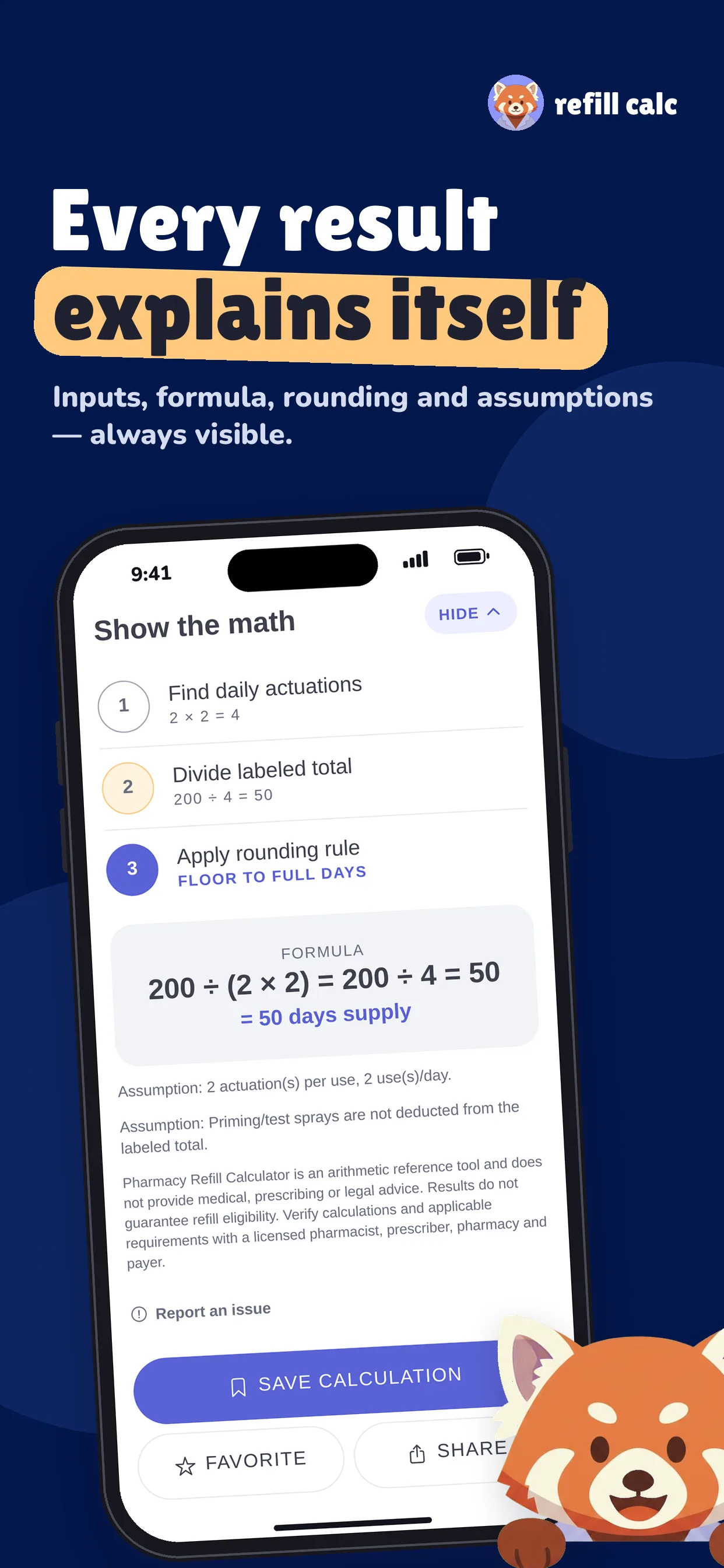
Expand Show the Math to review the formula, substituted values, assumptions and rounding behind a result.
Use dedicated workflows for tablets, oral liquids, inhalers, nasal sprays and eye or ear drops.
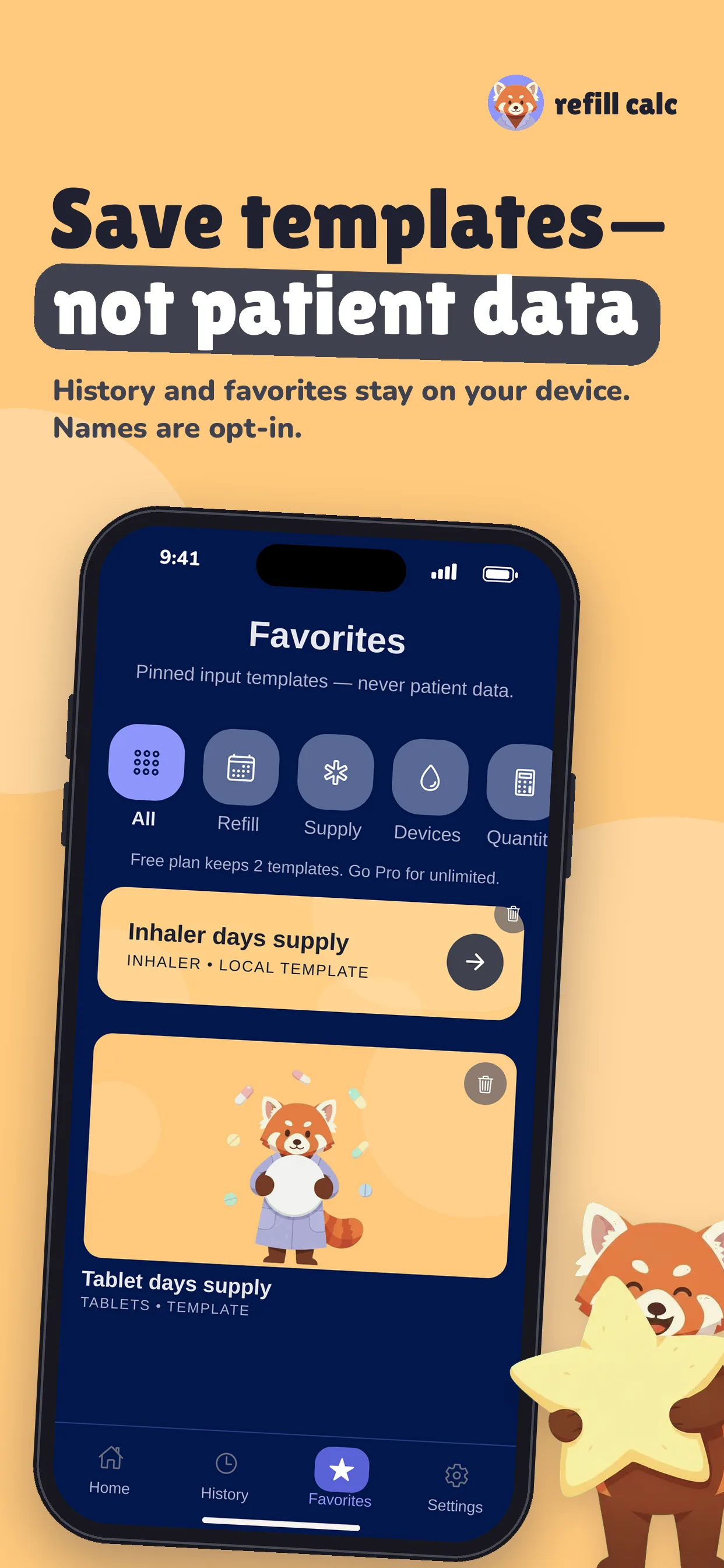
Save generic calculations and reusable templates locally, without creating an account.
Inside version 1.0
Swipe on a phone or browse the full gallery on a larger screen.

Made for verification
A useful prescription refill calculator should make its reasoning easy to inspect. Every valid result includes an audit trail: the inputs, formula, substituted values, unit conversions, assumptions and rounding rule.
Start with refill date, days supply, quantity, inhaler or drops.
Only complete, unambiguous inputs produce a result.
Review the calculation steps and verify the answer before using it.
No account is required. Medication names are optional, and saved history, favorites, preferences and selected photos remain on your device.
Important
Pharmacy Refill Calculator does not provide medical, prescribing or legal advice. Results do not guarantee refill eligibility. Always verify calculations and applicable requirements with a licensed pharmacist, prescriber, pharmacy and payer.
It calculates refill-date timelines, days supply and quantities needed. It also includes workflows for inhalers, sprays and eye or ear drops. Results include the formula and assumptions used.
No. A result is an arithmetic reference only. Actual refill eligibility depends on the prescription, prescriber, pharmacy, payer and applicable law. Verify the result with a licensed pharmacist or the relevant organization.
Yes. Choose a common target supply or enter a custom number of days. The quantity calculator shows the raw result and the selected rounding rule.
A 28 day refill cycle adds 28 calendar days to the fill date rather than a calendar month, so the refill date drifts earlier each cycle. Filled on April 1 with 28 days supplied, the estimated next date is April 29, then May 27, then June 24. Enter 28 as the days supplied and the calculator handles the drift for you.
Yes. A 28 day supply is four exact weeks and repeats 13 times a year, while a 30 day supply approximates a calendar month and repeats about 12 times a year. Blister-packed and weekly-dosed medications often use 28 days, so the two schedules separate by roughly two weeks over a year.
It depends on your plan's refill-too-soon rule. Under a common 80% rule a 30 day supply can be refilled on day 24, which is 6 days early, and under a 75% rule on day 23. Enter the days early your plan allows and the calculator gives the exact date. Controlled substances are often held to a stricter limit.
Divide the quantity dispensed by the amount taken per day. For example, 180 tablets taken one tablet twice a day is 180 ÷ 2 = 90 days, about three months. Liquids work the same way in millilitres: 150 mL taken 5 mL three times a day is 150 ÷ 15 = 10 days.
Yes. Prescription, Rx, script, medication, medicine and pill refill calculations use the same arithmetic, which is fill date plus days supplied, minus any early-refill allowance. The wording differs by country and by pharmacy, but the calculation does not.
You can calculate the arithmetic date for a controlled substance, but treat the result as a reference only. Controlled substances are governed by federal, state and provincial law, prescriber directions and pharmacy policy, and early fills are frequently restricted or prohibited regardless of the arithmetic. Confirm every controlled-substance date with the dispensing pharmacist.
Yes. Version 1.0 includes calculators for tablets and capsules, oral liquids, inhalers and nasal sprays, eye or ear drops, and reverse quantity planning.
Medication names are optional. Saved calculations, favorites, preferences and selected photos are stored locally on your device. The app does not require an account or use a remote medication database.
No. It is an arithmetic reference tool for pharmacists, technicians and students. It does not provide medical, prescribing or legal advice and should not be used as the sole basis for a clinical or dispensing decision.
Unlimited calculations, saved favorites and full offline use. No account, no subscription.